SASE: From chaos to control in your own house
Cloud-based services, flexible work arrangements, and new threats are challenging traditional perimeter security. In this article, we take a closer look at how SASE brings security together and gives organizations greater control, regardless of where users, data, and services are located.
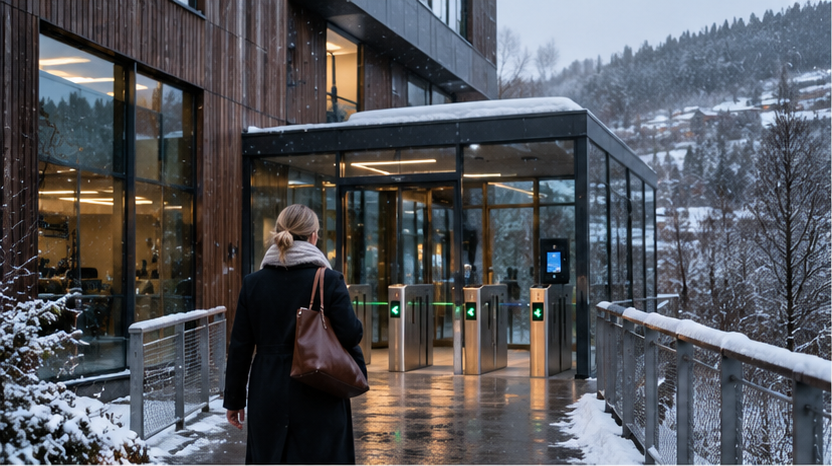

Over the past decade, IT and IT security have undergone a major transformation. Today's security challenges and threat landscape are constantly changing, which means we need to be able to adapt our security implementations more quickly than before.
With traditional security solutions, this would place enormous demands on an organization.
But how can a traditional network and security approach hold an organization back? Historically, many security principles have been based on perimeter-based defense.
In the past, an organization's users worked from secure office locations, services ran in the organization's own data centers, partners connected through dedicated lines, and everything was routed through central checkpoints controlling traffic in and out of different network zones.
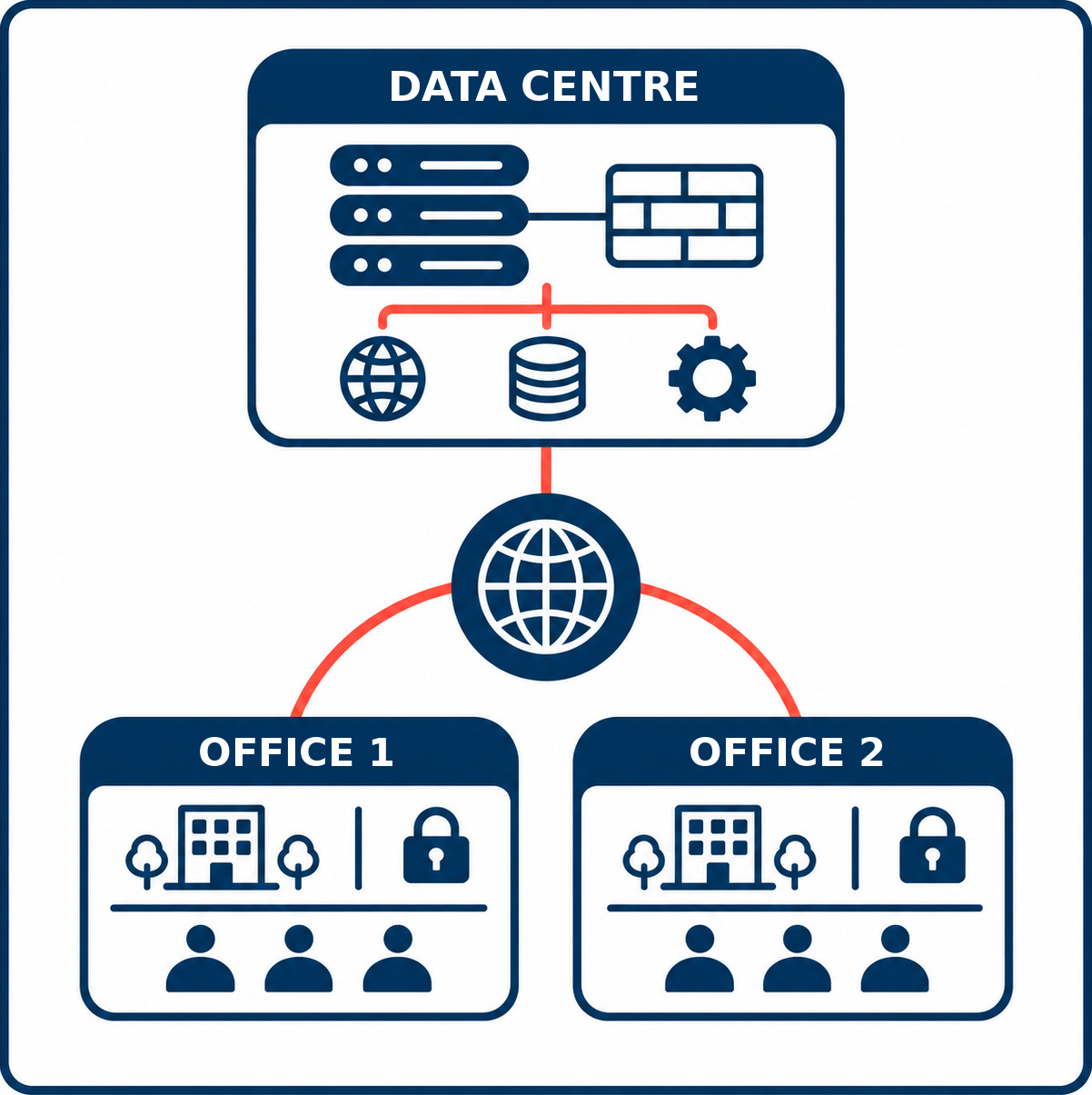
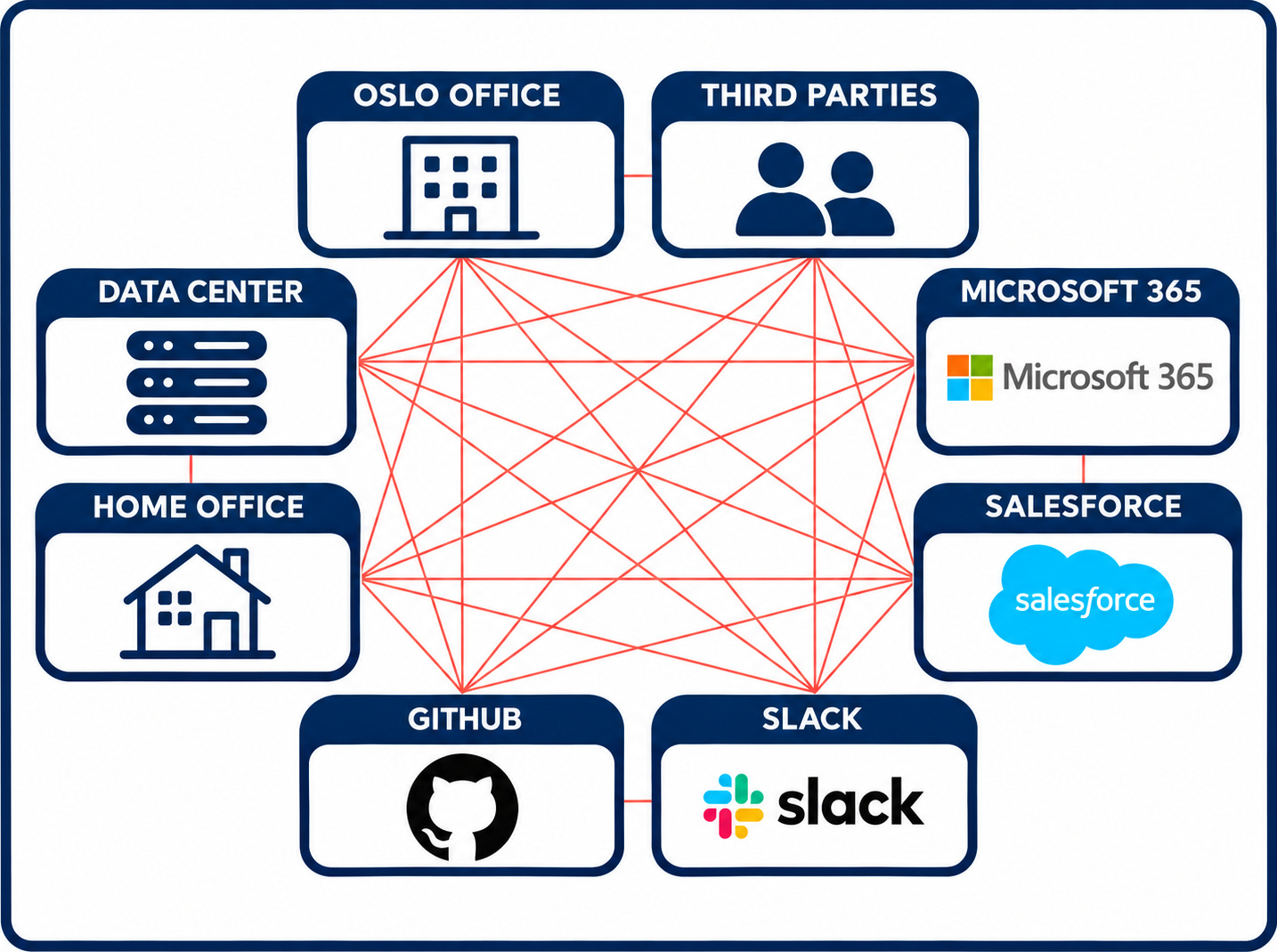
That is no longer how we work. Users can work from anywhere, often at any time. Services are delivered as IaaS, PaaS, or SaaS over the internet and can be accessed from anywhere in the world.
In the age of AI, users do not even have to perform every action themselves. Trained agents can work around the clock based on inputs and algorithms. And let's be honest: this is probably here to stay.
Against this backdrop, the old perimeter-based mindset prevents organizations from adapting to new technologies. Infrastructure becomes more dependent on traditional perimeters, less scalable, and more complex to operate. At the same time, the attack surface increases, while opportunities to integrate and use cloud and AI services become more limited.
What is SASE?
When I first started looking into what SASE actually was, it took me a while to understand what made it different from a next-generation firewall delivered by a third party. So let's break it down:
SASE = Secure Access Service Edge
In simpler terms = a perimeter for secure access to services
Put another way = a secure perimeter that provides access to services
In short = "a unified perimeter for every part of the infrastructure"
One security perimeter for the entire infrastructure
In other words, SASE becomes the organization's new unified perimeter, available everywhere and as close to the user as possible. All communication between users, services, agents, and data passes through the SASE control point.
This is where the security mechanisms needed to protect every part of the infrastructure can be applied. Security controls no longer have to differ depending on whether the user is sitting in the office, at the data center, or at a café in London.
Only then can we achieve a unified security implementation across the entire infrastructure.
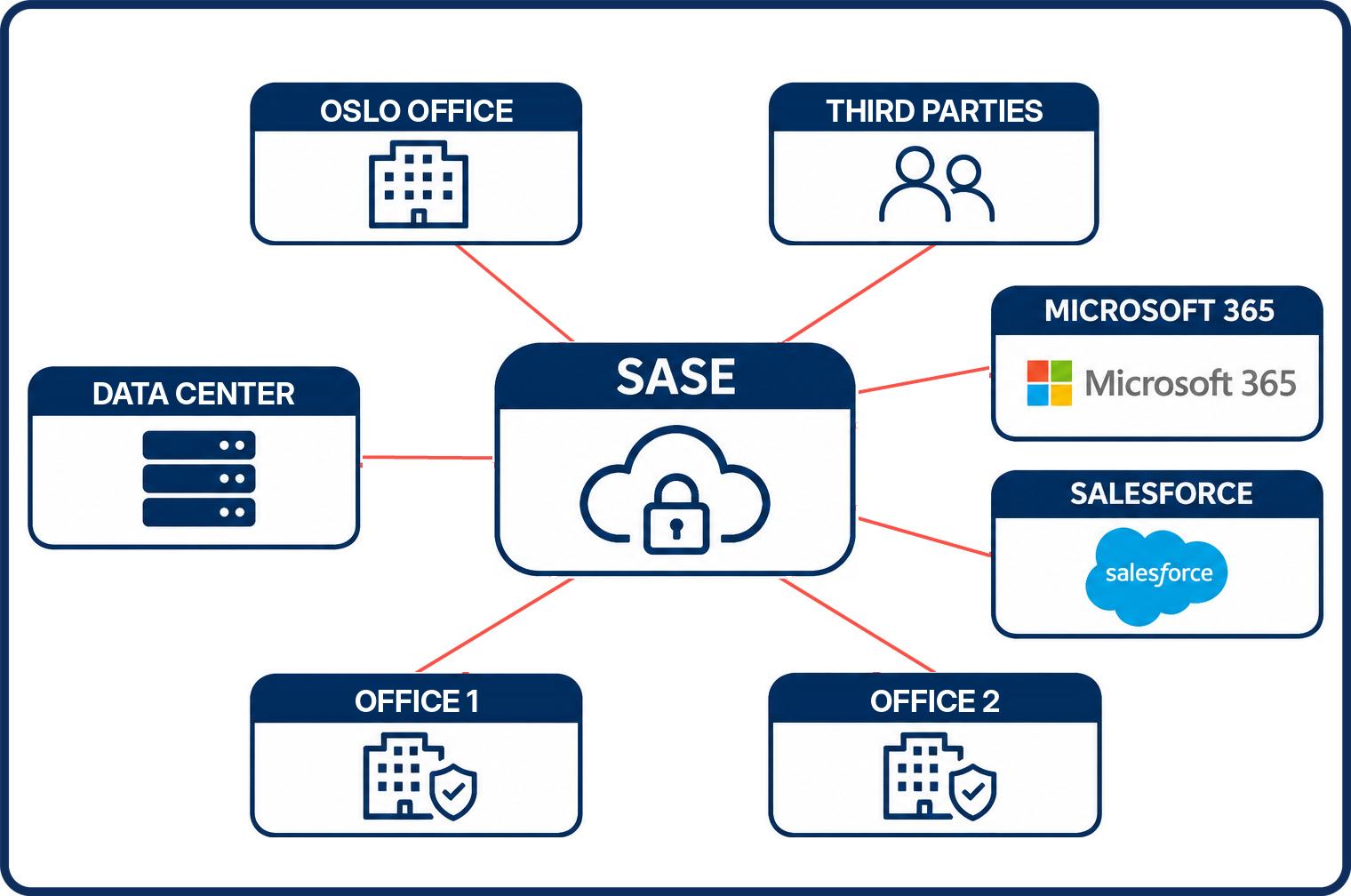
SASE is the name for a security service delivery model and includes a range of security mechanisms and functions that can be applied to traffic as needed. These may include Zero Trust Network Access, Cloud Access Security Broker (CASB), Secure Web Gateway (SWG), Firewall as a Service (FaaS), and Data Loss Prevention (DLP).
SASE explained using an office building
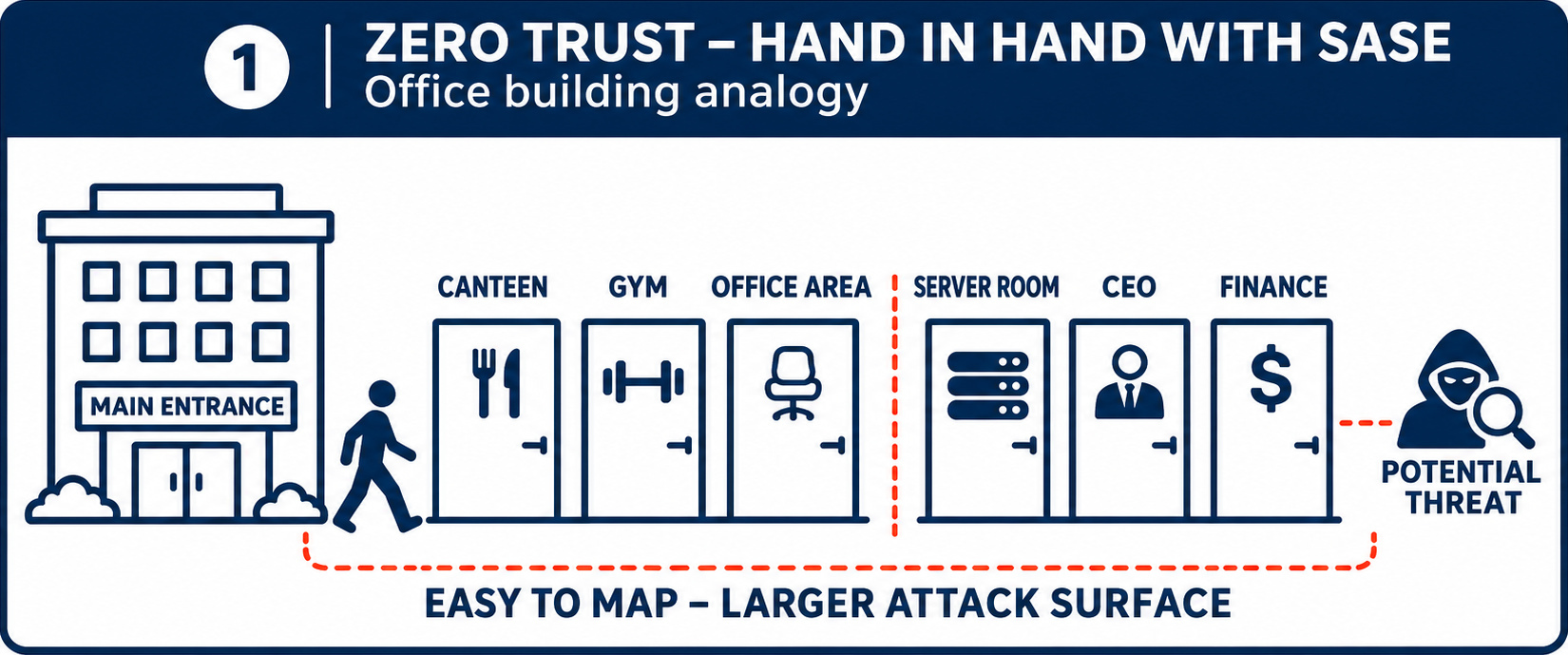
To make this easier to understand, I like to compare it to something in the real world. Let's imagine an office building owned by an organization. In a traditional perimeter-based design, you would need an access card to enter the building, where someone would be sitting at the reception desk.
To receive an access card, you first need to identify yourself. Once you have the card, you can proceed to the floor and part of the building you are authorized to access. This would typically include the cafeteria, gym, locker rooms, and office areas.
On your way there, you might pass doors or areas marked "Data Room," "CEO," "Archives," and "Finance." Your access card would not allow you to enter these areas, but you could still observe and map their locations.
This creates an opportunity for a malicious actor to map the building and wait for a moment when a door is left open or someone makes tailgating possible. This is a major weakness of this type of security.
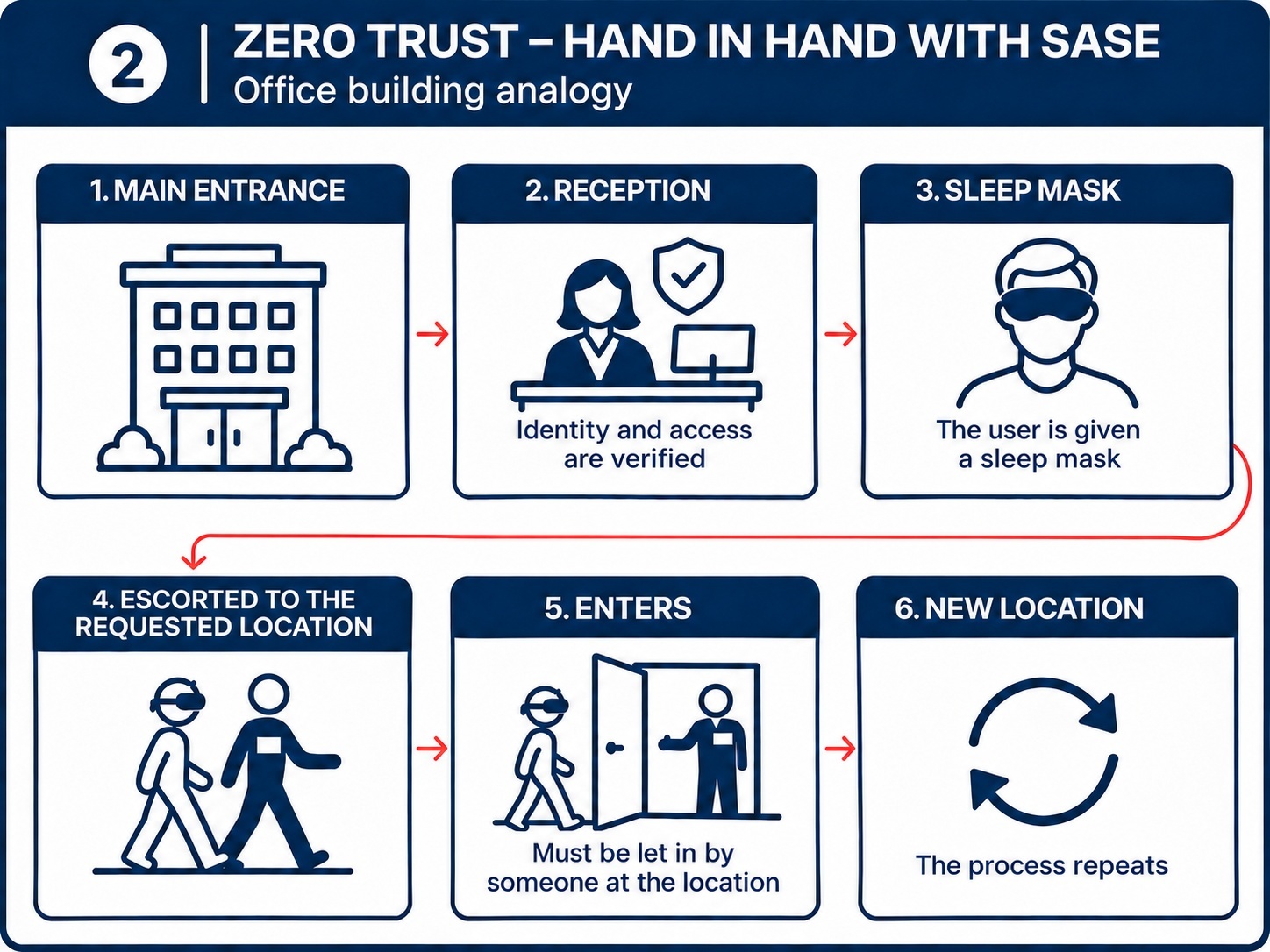
If we look at the same situation through a SASE implementation, things work differently. The user must first go to a central reception desk and register. There, they must state who they are and where they need to go.
Once their identity and access have been verified, the user is given a sleep mask and escorted to the specified destination. The mask can only be removed when the user arrives at the requested location.
The user must repeat this process every time they want to visit a new location, whether it is the cafeteria, gym, or office. In this organization, neither the user nor a malicious actor would be able to map or exploit vulnerabilities within the same perimeter.
This significantly reduces the attack surface.
Dynamic security based on need
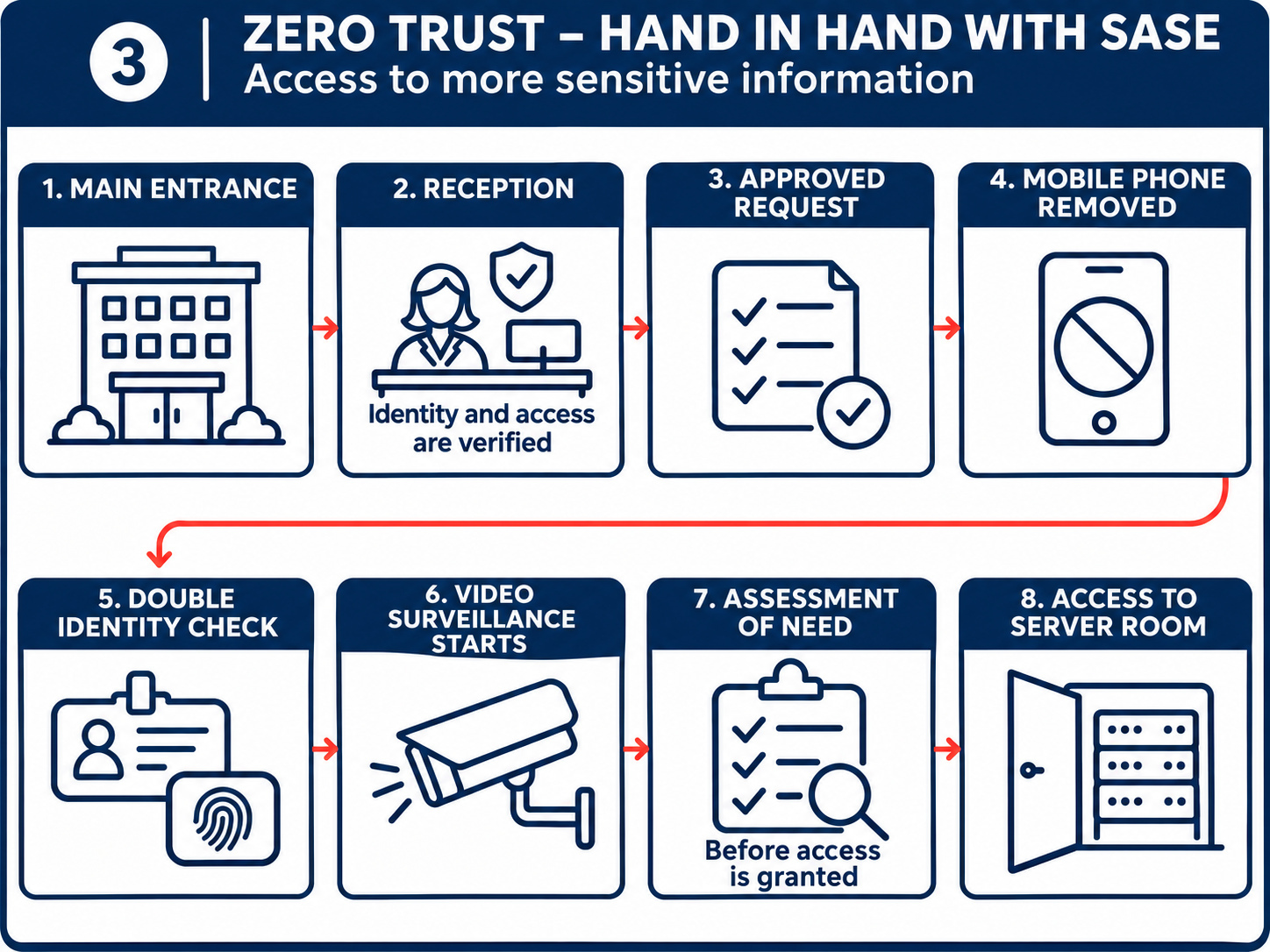
To take the analogy one step further, let's say a user needs access to the data room or archives, where a great deal of sensitive information is stored. The reception desk could then introduce additional security measures before each visit. Perhaps we remove the user's phone, require a second identity check, activate camera surveillance, or apply similar controls. This allows the organization to adapt security checks dynamically based on value and risk.
Next step: SASE in practice
In a future article, I will explain how SASE can be implemented step by step using Zscaler as an example.
Explore more

How the food industry can protect itself against cyberattacks

Reintroducing Zero Trust in the age of AI

Ten years. Ten stories from the front lines of cyberwarfare