How the food industry can protect itself against cyberattacks
Cyberattacks can affect refrigeration systems, production equipment, and automated warehouses. The consequences can include spoiled food, production shutdowns, and delayed deliveries. What can leaders in the food industry do to reduce the risk?
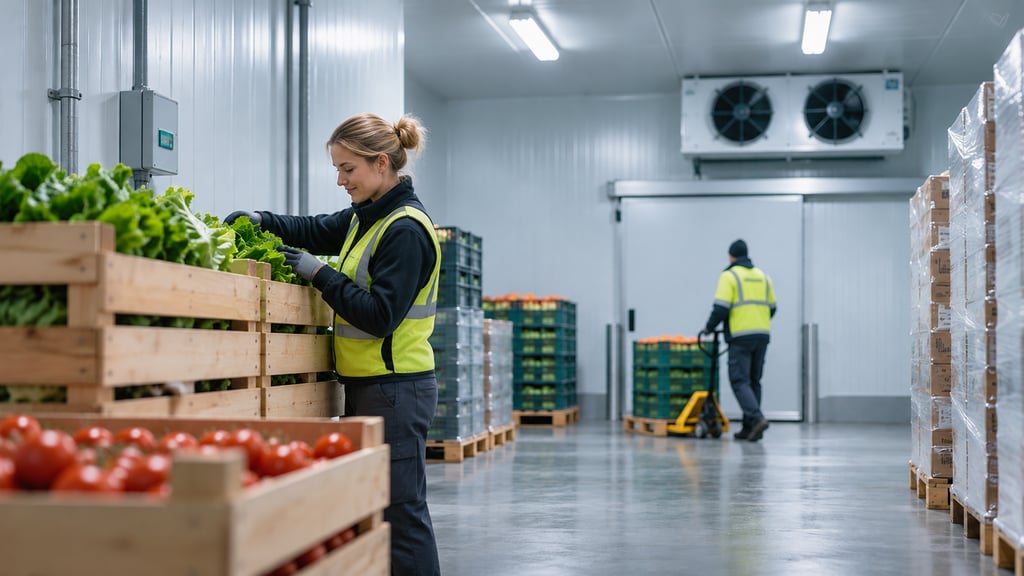

Protecting PCs and email is not enough. Management must also have a clear overview of the systems that control refrigeration, production, and storage. Which of these are essential to operations, and who has access to them? This is important even when external suppliers are responsible for operations and maintenance.
Incidents in France and the Nordic countries
On October 12, 2026, a cyberattack affected refrigeration and freezer systems at around 700 grocery retail locations in France. The attackers changed the defrost settings, causing temperatures to rise. Large quantities of food had to be discarded, and at least 15 fire-related incidents were reported.
On November 9, French authorities identified Shahid Kaveh as responsible for the attack. The group is a cyber unit linked to Iran's Islamic Revolutionary Guard Corps (IRGC).
In Sweden, several ICA and Coop stores experienced problems with their refrigeration and freezer systems following suspected cyberattacks on November 2. In Norway, possible attacks were also reported at Havaristen and Ullensvang Fruktlager.
There is no documented evidence that the same threat actor was responsible for the incidents in France and the Nordic countries. Nevertheless, these incidents illustrate what can happen when someone gains access to systems controlling critical equipment.
Identify the systems your business depends on
The systems that control refrigeration, production equipment, and automated warehouses are known as operational technology (OT). Put simply, this is the technology that makes physical equipment work. OT may be connected to an organization's regular IT systems, which are used for tasks such as ordering and administration.
When these systems fail, goods can be lost and production can come to a halt. Failures in critical equipment can also create dangerous situations for employees and others and, in the worst case, put people's health and lives at risk.
Not all businesses are equally prepared. The Norwegian National Security Authority (NSM) and the Norwegian Business and Industry Security Council (NSR) consider Norwegian grocery chains generally well protected against this type of attack. At the same time, they have identified refrigeration systems with weak security at some Norwegian businesses.
Risk awareness can also vary. Some smaller wholesalers and warehousing companies may have limited understanding of how an attack on their refrigeration and storage systems would affect operations. This does not mean that smaller businesses are generally less secure, but rather that risks are not necessarily understood or prioritized equally everywhere.
Management should therefore identify which systems the business depends on most and assess the potential costs if they stop working. How long can production remain idle? What happens to the goods if refrigeration fails? Which deliveries will be delayed?
An OT security maturity assessment can provide a clearer picture of how well these systems are protected, what weaknesses exist, and which improvements the business should prioritize first.
Ensure that only authorized people have access
Many refrigeration, storage, and production systems can be controlled remotely. This makes maintenance easier but can also give unauthorized individuals access if the connections are not adequately secured.
Following the attacks in France, French cybersecurity authorities recommended that control systems should not be directly accessible from the internet. They also recommended secure access for suppliers connecting remotely, along with checks of system settings and updates.
Businesses should therefore know who can log in to these systems, what they can access, and whether they still need that access. Factory-default passwords must be changed. Updates should be planned together with people familiar with the equipment to avoid unnecessary disruption to operations.
Another measure is network segmentation. This means separating different parts of a computer network, such as office systems and production equipment. Doing so makes it more difficult for an attack to spread from one system to another.
It is also important to establish clear security requirements for suppliers. NSR has published guidance on how the food industry can manage risks associated with IT suppliers.
Detect problems before they cause more damage
Strong security measures reduce the risk of attacks, but businesses must also be able to detect when something is wrong.
Unusual logins, changes to refrigeration system settings, or temperatures that suddenly rise may indicate a problem. However, receiving an alert is of little value if no one follows up on it.
Businesses should therefore determine which systems can be monitored, who should receive alerts, and who is responsible for responding.
Sicra SOC is a service that provides continuous security monitoring and support during cyberattacks. It can help detect and manage incidents in the systems covered by the service.
For refrigeration and production systems, monitoring must be adapted to the equipment. Not all systems can be monitored in the same way as conventional IT systems.
Have a plan for when critical systems stop working
Even businesses with strong security measures can experience failures in critical systems. Management must therefore also plan how operations can continue if an attack succeeds.
A contingency plan should describe who needs to be notified, how goods and equipment can be protected, and how the business can restore its systems to normal operation.
For refrigeration and freezer systems, it may be necessary to measure temperatures independently of the normal control system. Businesses must also have procedures for handling goods that may have been stored at incorrect temperatures. The Norwegian Food Safety Authority sets requirements for temperature control and safe food handling.
These plans should be tested through exercises. What should the business do if the refrigeration system can no longer be controlled remotely? Or if an automated warehouse stops working and the supplier cannot resolve the problem immediately?
At the same time, security measures must be implemented in ways that do not jeopardize day-to-day operations. This is also an important principle in the OT security guidance published by the U.S. National Institute of Standards and Technology (NIST).
Management must prioritize what matters most
Management does not need to understand every technical detail. However, it must know which systems the business cannot operate without, what could happen if they fail, and who is responsible for reducing the associated risks.
With this understanding, it becomes easier to invest time and resources in the measures that will make the greatest difference.
The goal is to protect people and assets, avoid unnecessary operational disruptions, and ensure that food can continue to be produced, stored, and delivered.
Explore more
Reintroducing Zero Trust in the age of AI

Ten years. Ten stories from the front lines of cyberwarfare

The future of cybersecurity: More regulation and three AI risks