Attack Conference 2025: Real threats and new regulations require action
The next cyberattacks against Norwegian businesses will not only be about stealing data or financial gains, but also operational shutdowns. This summarizes the main message from Attack 2025, Norway’s leading cybersecurity conference.
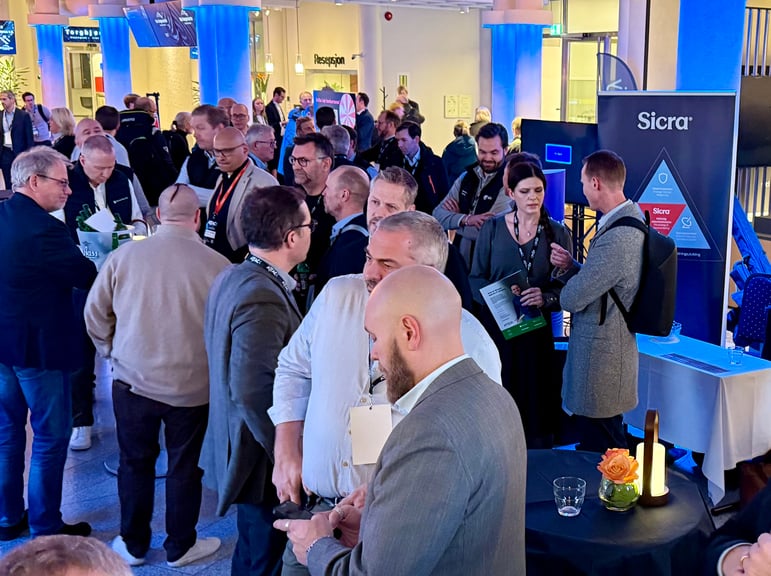
Digitalization and Public Governance Minister Karianne Oldernes Tung opened Attack 2025. She emphasized that Norway is in the most severe geopolitical situation since World War II. This increases the likelihood of destructive attacks against critical digital infrastructure. At the same time, the probability of profit-driven cyberattacks on businesses is also rising.
Attack 2025 brought together central security actors such as the Norwegian National Security Authority (NSM), the Directorate for Civil Protection (DSB), the Police Security Service (PST), Kripos, the Norwegian Cyber Security Center (NCSC), the Norwegian Defence Research Establishment (FFI), Cyber Defence, and the leading technology environments in cybersecurity.
A key theme was that Norway’s digital vulnerability is increasing in step with the digitalization of industry and critical infrastructure. The convergence between IT (information technology) and OT (operational technology) makes the threat landscape more complex than ever. At the same time, threat actors have become more skilled, have stronger tools such as artificial intelligence (AI), and there are more nation-state actors. This places greater demands on both public and private organizations, regardless of size.
Today’s digital threats
Because of the geopolitical situation, PST, NSM, Kripos, and other security authorities are warning about different cyberattacks targeting Norwegian organizations.
Authorities believe there is a high likelihood of:
-
Destructive cyberattacks.
-
Sabotage of digital or physical infrastructure.
-
Influence operations.
-
Organized crime becoming more professional and more targeted toward infrastructure — both OT (for example production systems) and IT through digital attacks for profit, such as ransomware.
-
Technically advanced online fraud aimed at individuals or organizations through their employees.
-
Intelligence operations, including mapping of physical and digital infrastructure and the placement of insiders.
The conference highlighted the following risk factors and trends:
-
Mobile phones: an underestimated risk
-
Information thieves: collecting as much information as possible without leaving traces
-
Access through login credentials
-
ClickFix and FakeUpdates: new forms of social engineering
-
QR codes, voice-phishing and cross-platform attacks
-
Attack-as-a-service: ready-made attack packages
-
Vulnerable supply chains and embedded malware
-
AI agents and automated fraud
-
Further personalization of attacks
IT and OT introduce new risks
The digitalization of industry, energy, water, healthcare, and transport brings major benefits — and new vulnerabilities. Systems originally developed to be isolated, such as controllers, sensors and control systems, are today connected to IT platforms. When IT and OT become more closely linked, a seemingly small incident in the IT environment can develop into a critical OT situation. Threat actors attempt to exploit weaknesses in these connections.
This creates two major challenges:
-
A larger attack surface: OT systems become an entry point into an organization’s most critical systems.
-
Greater consequences: A successful attack is no longer only about data. It can stop production, harm the environment, weaken national infrastructure, or put lives and health at risk.
Holistic security through leadership, monitoring, and expertise
Attack 2025 underlined what we at Sicra experience — that digital risk is increasing not only in IT systems but also in production environments, industrial systems and society-critical processes. With the merger of Sicra and Bluetree, we took a strategic step to address this development. We combine leadership, technology, monitoring and OT expertise to give organizations the security they need today. Many organizations have come far in IT security but lack the same level of maturity in OT.
To increase security, organizations must acknowledge that:
-
IT and OT can no longer be treated as two separate worlds.
-
The risk arises in the intersection between IT and OT.
Sicra’s security triangle is our method for building holistic security, from the boardroom to the server room and all the way out to industrial control systems. To create real digital security, organizations must handle security at several levels: strategic, operational, technical and industrial.
Sicra’s security triangle consists of three areas:
1. Security management/ CISO
Strategic security leadership supported by a full team of technical consultants and advisors. Sicra acts as an advisor and partner to the organization’s leadership.
2. Consultants with deep expertise in security, OT and infrastructure
This is Sicra’s professional foundation: advisors, architects and specialists in infrastructure, networking, cybersecurity and a strong, specialized OT security environment.
3. Operations Center – Network | Security Operations Center (NOC/SOC)
Sicra’s operational muscle: our operations center includes both the Network Operations Center (NOC) and the Security Operations Center (SOC).
-
NOC monitors and operates critical network services, infrastructure and platforms to ensure stability, performance and high availability.
-
SOC combines monitoring, response capability and forensic expertise to provide continuous protection, 24/7, where Sicra is the local security partner for Arctic Wolf. Our SOC is independent from the teams operating the infrastructure, avoiding conflicts of interest.
Attack 2025 made it clear that cybersecurity is about more than technology and isolated measures.
We need:
-
Shared situational awareness between IT and OT
-
Holistic risk management across technology, processes and value chains
-
Operational security that monitors both IT and OT environments
-
Competence that understands the connections
This is what Sicra works with every day: helping organizations modernize, secure and operate both IT and OT — as one coherent whole.
Explore more
How to choose the right SOC services in 2026

Sicra SOC strengthens your organization’s cybersecurity

How Sicra SOC detects cyber threats