Cyber Threat Landscape 2026: Insights from Arctic Wolf’s threat report
Ransomware is the largest and most serious cyber threat today, according to Arctic Wolf. That became clear during our breakfast seminar Cyber Threat Landscape 2026.
– If an organization is hit by ransomware, you should contact a professional negotiator at a security company. In 77 percent of cases, you avoid paying the ransom, says Christopher Fielder, security expert and Field CTO at Arctic Wolf.
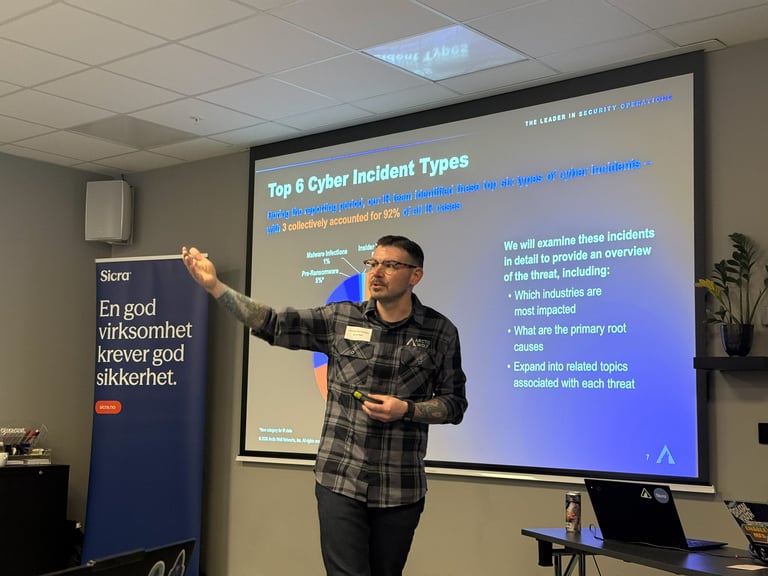

On Thursday 02/05/2026, an exclusive group of invited guests gained solid insight into the digital threats organizations must deal with today. Sicra hosted the breakfast seminar “Cyber Threat Landscape 2026,” where Christopher Fielder, Field CTO at the world-leading IT security company Arctic Wolf, delivered the presentation “The Reality of Modern Cyber Threats”.
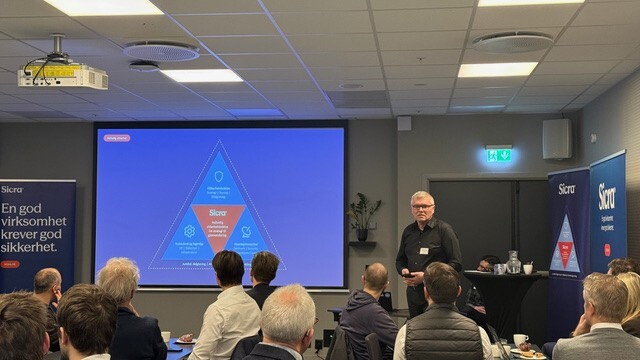
Before Fielder took the stage, guests were given a walkthrough of Sicra’s security triangle by Sicra CEO Stig Valderhaug
Arctic Wolf monitors cyberattacks around the world and analyzes millions of reports and incidents. For the third year in a row, the security company is publishing its annual threat report. "Arctic Wolf Threat Report 2026" launches on February 10, 2026. Fielder’s presentation was based on the report, and the message was serious: cyberattacks are becoming increasingly professional, business-driven, and harder for affected organizations to handle.
Ransomware still the largest and most serious
One of the main points from Fielder’s presentation focused on ransomware. Ransomware is the largest and most serious category of cyberattacks, according to Arctic Wolf. 44 percent of all cyberattacks are ransomware, where hackers lock down an organization’s files and demand payment (a ransom) in exchange for sharing code that makes data, files, and information accessible again.
Ransomware attacks are increasingly not just about encryption, but about data theft, extortion, and reputational pressure. At the same time, the ransomware ecosystem has matured, with dedicated groups handling intrusion, surveillance, negotiation, and payment.
A key point in Christopher Fielder’s presentation was what organizations should actually do if they are hit.
– If you are hit, you should contact an intermediary, someone who is an expert at negotiating with ransomware attackers. Then you can reach an agreement with the attackers and reduce the demand significantly. In 77 percent of the cases we are involved in, you avoid paying a ransom entirely, Fielder explained.
One factor that is not always widely known is that paying a ransom after a ransomware attack can also involve legal risk. Some threat actors are linked to groups defined as terrorist organizations, or operate from countries subject to international sanctions. In such cases, a payment can in principle lead to criminal liability, for example related to violations of sanctions regulations or terrorist financing.
Professional ransomware negotiators often have deep knowledge of the threat actors’ modus operandi, and can in many cases identify who is behind an attack. This makes it possible to assess both legal and regulatory risk before any decisions are made. Experience shows that professional handling can be decisive—not only to reduce financial loss, but also to ensure the organization acts within applicable laws and frameworks.
Experience shows that professional ransomware negotiators can play a decisive role in a crisis situation, both to verify threats, reduce demands, and buy time to make the right decisions. Handling negotiations on your own increases risk, both financially and legally.
Create AI rules!
The second main point was about artificial intelligence (AI). AI is actively used by cybercriminals, including for social engineering, development, and automation of attacks. At the same time, many organizations are adopting generative AI without clear boundaries. That is cause for concern, Fielder emphasized.
– Organizations must establish a clear set of rules around the use of AI that defines what is permitted use, how data can be handled, and who is responsible. If you don’t have an AI policy in your organization, drop everything and write one now. If sensitive data has been uploaded into an AI model, it’s too late, Christopher Fielder said during the breakfast seminar.
Fielder emphasized the need for a more holistic and leadership-anchored view of cybersecurity, where preparedness, roles, and decision-making processes are just as important as technology.
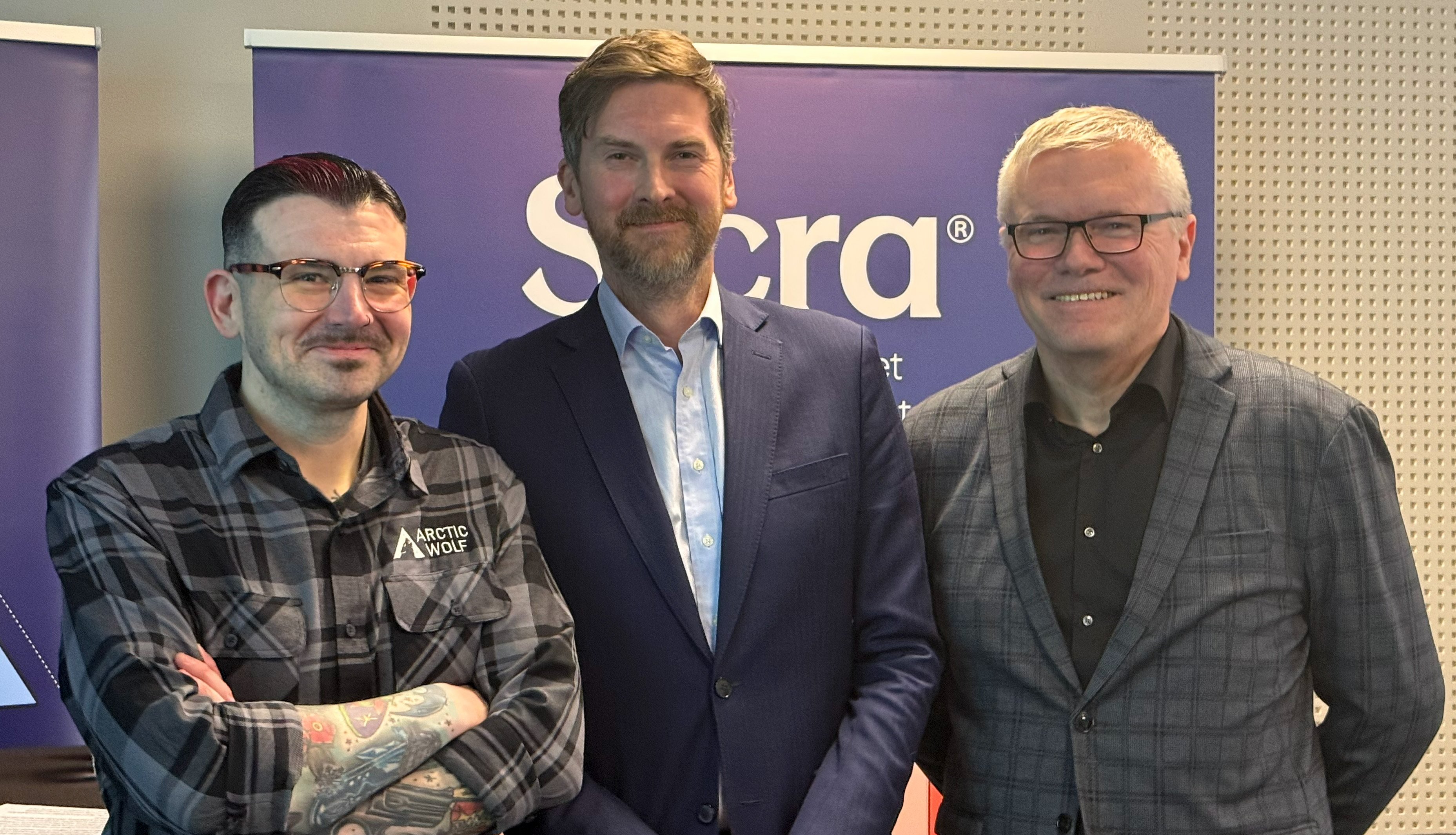
Sicra partner Thommessen was represented at the seminar. In the photo from left: Christopher Fielder, CTO, Arctic Wolf, Christopher Sparre-Enger Clausen, Partner | Attorney, Thommessen, and Stig Valderhaug, CEO, Sicra
Read the story: Sicra and the law firm Thommessen enter into a strategic partnership on cybersecurity and compliance
Explore more

Ten years. Ten stories from the front lines of cyberwarfare

The future of cybersecurity: More regulation and three AI risks
Cyberattackers use AI, so cyber defense needs AI too